Friday, April 9, 2010

the miraculous


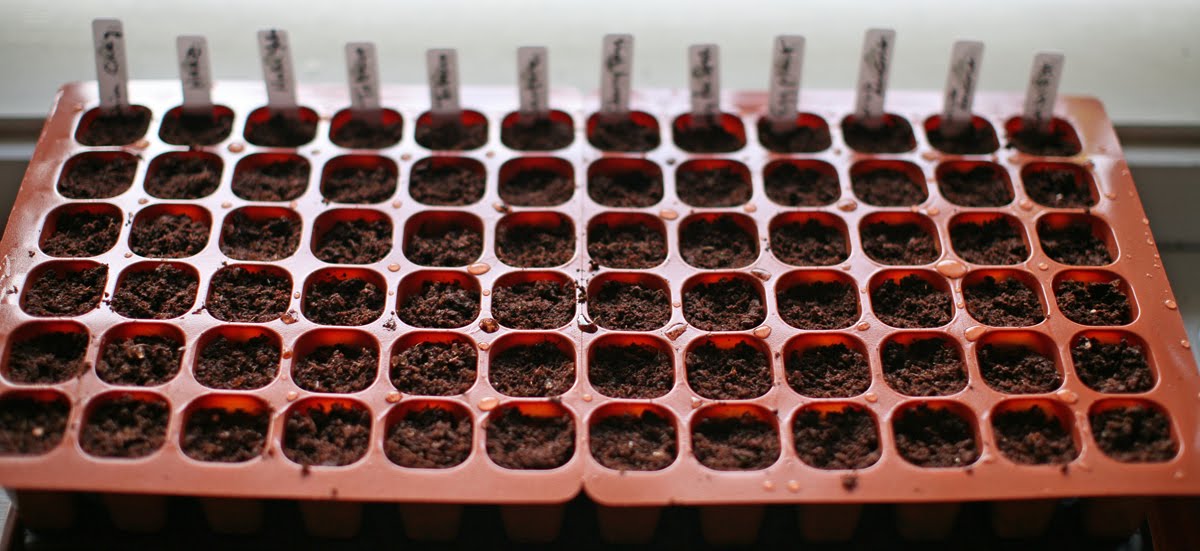
It could be assumed that after years of gardening one might become complacent about the whole process. Certainly, tasks like weeding and digging are chores I could do without, but the entire growth process from seed to harvest has never lost it's magic for me. No matter how many times I sow seeds in soil, I am always astounded by the miracle of germination. On Easter Sunday I started my seeds, and now only five days later I have mini plants! Each variety growing at it's own individual pace. These tiny plants are going to feed me abundantly throughout the next six months. Squash seedlings looking enormous next to the tiny Wild Arugula shoots. The heirloom Tomatoes still holding out below the surface of the soil. I always find it interesting that seeds that are saved from home gardens take much longer to germinate than commercially packaged seeds, and I would like to find out why that is the case. Is there something added to commercially prepared seeds to enhance germination? I'm not even referring to commercial Hybrid seeds, but even high quality organic seeds such as those sold by Renee's Garden seem to germinate much quicker than the seeds I save from home. For several years now I have been growing some heirloom Italian Roma tomatoes from seeds given to me by my friend Robert, who lives in Upstate New York. These seeds are always the last to germinate, so slow in fact that the first year I grew them I thought they had failed to germinate because all of the other seeds that were sown at the same time were well under way by the time these Roma's decided to poke their heads above the soil. If anyone has an answer to the reason for this difference in germination rate I would love to hear your comments on the subject.

Wednesday, April 7, 2010

Hooray for Heirloom Apples!

Laura Pedrick for The New York Times

...a nonprofit group called Renewing America’s Food Traditions (RAFT), which works with Slow Food, has declared this the year of the heirloom apple.


The Apple Grower: A Guide for the Organic Orchardist (Chelsea Green's Master Grower Gardening Series)


The New Book of Apples: The Definitive Guide to Over 2,000 Varieties

Leeks


It's been several years since I've grown leeks in the garden. Seems like the large number of tomato plants always win out over leeks for garden space. I love leeks and this year they are back in!

Leeks (Allium porrum)

Leeks belong to the lily family, along with their close relatives onions, garlic, scallions, shallots, and chives. The leek is a striking and graceful vegetable. Broad, flat, dark leaves cascade like a fountain around the contrasted white of its base. Milder and more refined in flavor than onions, leeks produce a pleasing aroma and sweeten as they cook. And there are no tears while cutting a leek.

Cooking tips:

-Leeks may be cooked whole; try braising or baking.

-Steam or boil leeks for 10-12 minutes. Top with butter, a dash of salt, pepper, and Parmesan cheese.

-Substitute leeks for onions in recipes and notice the subtle flavor changes.

-Puree cooked leeks for a soup base.


The above information is from the wonderful book...

From Asparagus to Zucchini

Sunday, April 4, 2010

Easter tradition


It's become part of my annual Easter tradition to get my seedlings started. It symbolizes rebirth and renewal as well as dovetailing nicely with the timing for the safe date to plant outside here in Zone 6, which is May 15th. What better way to celebrate Easter Sunday than to sow some life giving seeds? So after dinner with my family, I set out 72 seeds starts... my Amish heirloom seeds that I saved at the end of last year's harvest, some heirloom Roma tomatoes a friend has saved from his mother's Italian garden, as well as some Cherry Tomatoes, Wild Arugula, Eggplant,Patty Pan Squash, and some French Breakfast Radishes.


Spring has now officially arrived!

not-so-quiet food....


KFC's newest creation....Bacon and Cheese sandwich on "Fried Chicken" bread. 32 grams of fat and almost 1400 mgs of sodium

The Double Down